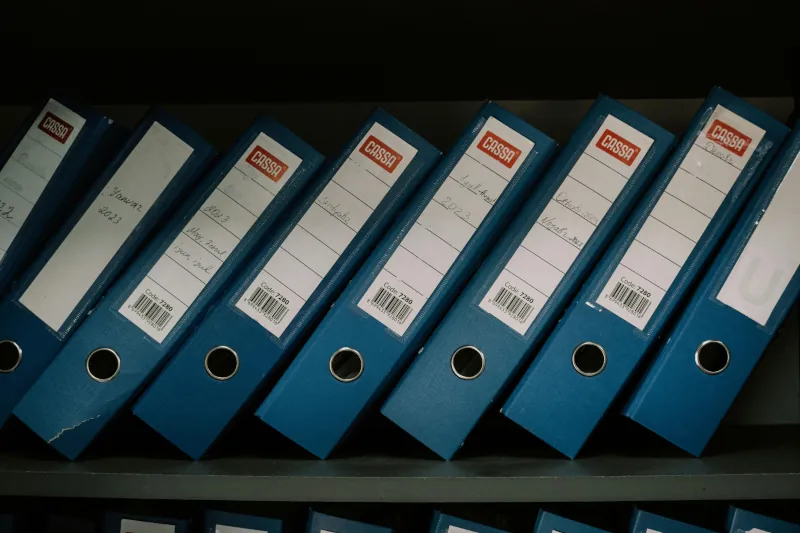
It's a wet Tuesday in March. You're halfway up a loft ladder on a survey in Reading when your phone goes. It's your accreditation scheme. They're auditing one of your EPCs - the Energy Performance Certificate you lodged on a plot in Swindon. Back in 2021. They'd like to see the evidence behind it. The photos. The site notes. The lot. By the end of the week.
Can you put your hands on it?
That one question decides whether the rest of your week is calm or a cold sweat. Because the EPC went in years ago. In your head, that job is long done. But your duty to the evidence behind it? That's still very much alive.
Here's the bit nobody spells out when you qualify: the certificate is the quick part. Hanging on to what's behind it is the long game.
How Long Do You Actually Have to Keep It?
A domestic EPC is valid for 10 years. It's easy to assume that's your number too. It isn't.
Your accreditation scheme's code of conduct - Elmhurst, Stroma, Quidos, Sava, ECMK, whichever one you're with - says you have to keep the evidence behind every EPC you lodge for at least 15 years. Not 10. Fifteen.
The certificate lasts 10 years. Your responsibility for the evidence behind it lasts 15. That gap is exactly where assessors get caught out.
Why the extra five years? A bit of law called the Latent Damage Act 1986. It sets a 15-year long-stop on negligence claims - the outer limit on how long after a piece of work someone can take you to court over it. Keep your evidence for that whole window and you've always got something to defend yourself with. Bin it at year 10 and you're exposed for another five with nothing to show.
Worth saying: schemes word this slightly differently, so check your own code of conduct for the exact figure. But 15 years is the number the industry works to, and it's the one tied to the law.
What "the Evidence" Actually Means
It isn't just the certificate sitting on the register. It's everything that justified the rating you gave. For a standard DEA doing an existing home, that's:
- Site notes and measurements - room dimensions, the readings, the data you actually keyed into the software
- Photos of every key element - walls and construction type, insulation, windows and doors, the main heating system and its controls, plus anything you couldn't fully get to
- Supporting documents - manufacturer details, build specifications, any paperwork the owner handed you on the day
- A record of your assumptions - where you used a default because the evidence wasn't there, and the reason why
For an OCDEA signing off a new build, the pile is bigger. On top of the SAP inputs you've got the full Appendix B photographic set - the geotagged, dated, timestamped photos taken right through the build, from foundations to airtightness to the boiler going in. Add the commissioning certificates, the airtightness test result, and the BREL report itself. Those new-build photos don't just sit with you, either - they're shared with Building Control and handed to the homeowner as part of the handover information. But you still keep your copy.
And here's the catch with photos. If the GPS, date, and time have been stripped out - because they came through WhatsApp, or got squashed into an email - the photo barely counts as evidence at all. A picture of a wall with no proof of where or when it was taken won't hold up in an audit, and it certainly won't hold up in a claim.
The metadata is the evidence. Lose it and you've kept a memory, not a record.
It's Not Filing. It's Your Defence.
Two things make this real rather than theoretical.
First, audits. Your scheme audits a sample of the EPCs you lodge - it's how they keep the register honest and your accreditation worth something. When your number comes up, you produce the evidence. Can't find it, or it's incomplete? That's a failed audit. Enough of those and your accreditation is on the line. No accreditation, no lodging EPCs, no income.
Second, liability. If a homeowner, a developer, or a buyer further down the line disputes a rating - or a defect surfaces and fingers start pointing - the evidence you kept is what stands between you and a very awkward conversation with your insurer. The assessors who sleep fine are the ones who can pull up a complete, dated, organised file in two minutes flat.
Evidence you can't find isn't evidence. It's just storage you're paying for.
The Storage Problem Nobody Warns You About
So you know you need to keep it. Simple enough for one job. Now multiply it.
A working assessor lodges hundreds of EPCs a year. Over a 15-year window that's thousands of jobs, each with its own bundle of photos, notes, and documents, all of which need to stay findable. And the old way of doing it falls apart fast:
- It lives in too many places - some on your phone, some on a laptop, a chunk on an external drive, the rest in an email folder you daren't clear out
- Hardware dies - the drive with three years of jobs on it picks the worst possible moment to fail, and there's no backup
- The metadata leaks away - every time a photo gets forwarded, compressed, or saved out of a chat app, the GPS and timestamp that made it useful quietly vanish
- You can't find anything - "the Swindon plot, 2021" means an hour digging through folders called New folder (2) before you even know if it's still there
Fifteen years is a long time to keep a shoebox of digital odds and ends safe, complete, and searchable. Most assessors are one dead laptop away from a problem they won't see coming.
So How Do You Keep It Safe for 15 Years?
The obligation sounds heavy, but meeting it comes down to treating your evidence as something you keep on purpose, not something that piles up by accident. A handful of habits do most of the work.
The big one is protecting the metadata. A photo is only worth keeping if it can still prove where and when it was taken. So capture evidence in a way that locks the GPS, date, and time into the image at the moment it's taken, and keep it well away from anything that strips that data out - WhatsApp, social apps, and email compression are the usual culprits. Once the metadata's gone, it's gone, and the photo stops being evidence.
After that, it's about redundancy and order. Keep more than one copy, and don't let both of them live on the same laptop that might not see out the decade. Give every job one consistent home, named so you can actually find it years later. And keep it in an order that mirrors how an audit reads it - by plot, by assessment, by Appendix B section - so producing it is a two-minute job rather than a weekend.
You don't need a vault. You need photos that still carry their metadata, one organised copy you can find, and a second copy somewhere else.
Buildsnpper Assessor - Free
The cleaner the evidence comes in, the easier it is to keep. Buildsnpper lets your builders capture photos with the GPS, date, and time baked in, organised by Appendix B section, then send them straight to you. Receive and review the lot in the free Buildsnpper Assessor app or the Assessor Portal.
App Store Google Play Assessor PortalWhat's Coming with EPC Reform (and Why Evidence Matters More, Not Less)
If you've been keeping half an eye on the news, you'll know the EPC itself is being overhauled. New-style domestic EPCs move away from one headline rating to four separate metrics: fabric performance, heating system, energy cost, and smart readiness. The certificate stays valid for 10 years, same as now.
The timing has slipped, mind. The reforms were first pencilled in for October 2026, but in March 2026 the government pushed the launch back to the second half of 2027, with the exact date still to be confirmed. A big part of the reason is the sheer scale of retraining assessors and rebuilding the qualifications around the new method. So there's a bit more breathing room - but the direction of travel hasn't changed.
Here's what it means for your evidence. A single rating was easy to wave through. Four metrics - fabric performance and heating system especially - put far more weight on what you can actually prove about the building. The photos of the insulation. The make and model of the heating system. The airtightness detail. That's the stuff the new metrics lean on.
So the duty to keep solid, dated, organised evidence isn't fading away with the reforms. If anything, it's about to matter more than ever.
More scrutiny, not less.
How to Keep It Audit-Ready
None of this needs to be a headache. Here's the short version:
- Know your number - dig out your scheme's code of conduct and confirm the exact retention period. For most, it's at least 15 years from lodging.
- Protect the metadata - never let evidence photos go through WhatsApp or get compressed into an email. Capture them in a way that keeps the GPS and timestamp baked in, every time.
- Keep it organised - sort each job by plot and assessment section, named so you can find it in years to come without the archaeology.
- Back it up - more than one copy, and not both on the same device or drive. A failed hard drive shouldn't be able to wipe out years of evidence.
- Log your assumptions - note where you used a default because the evidence wasn't there, and why. That context is worth a lot if anyone ever questions the rating.
The Bottom Line
Lodging the EPC feels like the finish line. It isn't - it's the start of a 15-year stretch where you're the one holding the evidence. Do that with a phone camera, a few hard drives, and good intentions, and you're gambling that nothing dies and nobody asks. Do it with evidence that's captured properly and held somewhere you can actually find it, and the audit call on a wet Tuesday stops being a cold sweat. It becomes a two-minute job.
That's the difference between dreading the question and answering it.
Want the upstream version of this story? Read our companion piece on getting structured photo evidence from your builders in the first place - because evidence that arrives clean is evidence that's easy to keep. And if you're ever unsure how the EPC, the SAP calculation, and the BREL report fit together, our plain-English glossary breaks it all down.